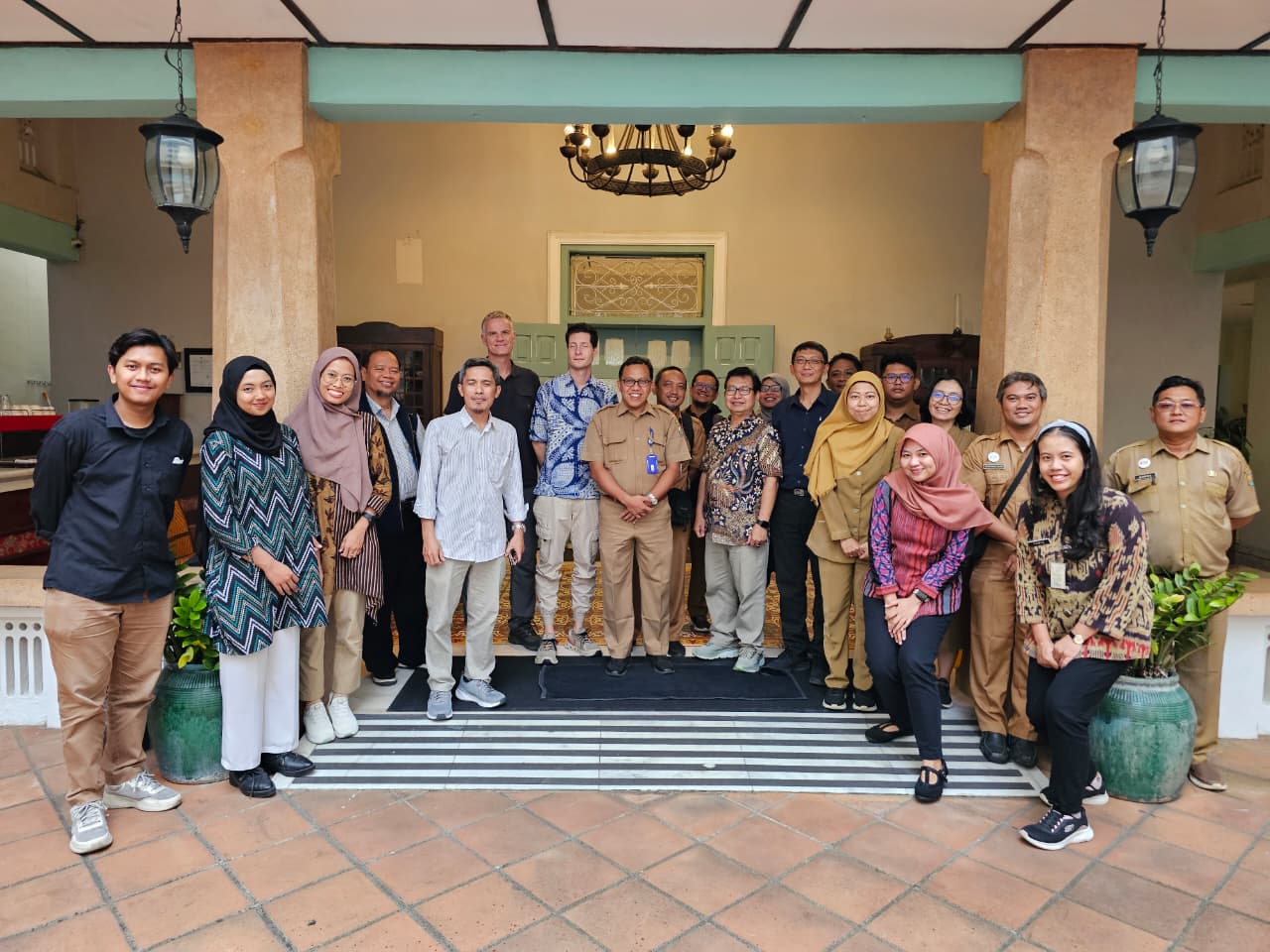
The Pekalongan region, Central Java, Indonesia is threatened by a combination of land subsidence and sea level rise, causing flooding from the sea to become more frequent and severe. Pump stations play an increasingly significant role in this, as the water can no longer flow to the sea by gravity due to sea level rise and land subsidence. Currently, water pump stations operate using electricity generated from power plants, mostly conventional coal-fired or diesel generators. As water pump stations are used more frequently and for longer periods, their CO2 emissions continue to increase along with their operational costs. To reduce greenhouse gas emissions by 70% by 2030, the feasibility of using solar energy for water pump stations is being investigated. On this occasion, the Department of Electrical Engineering, Faculty of Engineering, then Universitas Diponegoro in collaboration with Blue Deal Netherlands, Nederlandse Waterschapsbank Fund (Dutch Water Authority Bank Fund), and the Regional Government of Pekalongan City, and the Pekalongan Regency Government, have conducted a survey and research activity to assess the feasibility of solar energy for pumping stations in Pekalongan. This research activity has been going on for 1.5 years from October 22, 2024 to 2026. This research involved students in the Magister Program of Electrical Engineering (MTE) at Universitas Diponegoro (UNDIP). The students have carried out data collection, measurement and analysis, as part of their thesis research. Melissa Rahmawati Yusuf, as a Master’s student, have been conducting thesis research about a technical and economic study of the Design of a Solar Power Plant (PLTS) for the Monofacial Panel Type at the Tegal Dowo Pekalongan Pump House. Flora Wilhelmina Edoway is involved in this research by analyzing the performance of Monofacial and Bifacial PLTS Designs at the Kramat Sari Pekalongan Pump House. A collaborative article entitled “Photovoltaic System Assessment for Water Pumping Station Case Study: Pasir Kraton Kramat Pump Station at Pekalongan City” has also been published in an IEEE international conference, co-authored by a Master’s student of MTE UNDIP, Muhammad Rofiq Maududi. This kind of research involving various partners is very beneficial for students of the electrical engineering master’s program to gain experience in Engineering Solving Problems through Design as a systematic approach to creating the best technical solutions to solve real problems. The results of this research certainly provide a positive solution contribution to the Pekalongan Regional Government as part of PLTS planning design for Pump Stations to reduce carbon emissions and operational costs.